
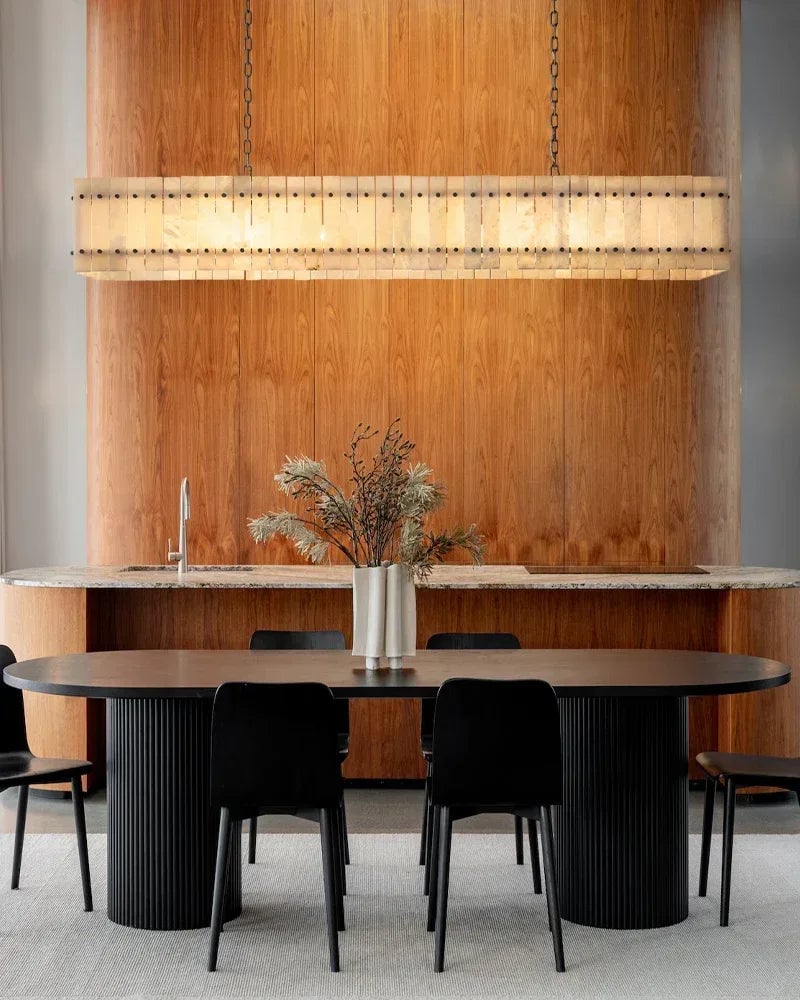
Our customers most frequently asked questions about Alabaster Lighting Fixtures
Lighting is more than illumination. It defines space, shapes atmosphere, and influences how a room feels and functions. At LightsStory, we believe choosing lighting should be clear and practical, not overwhelming.
What is alabaster in lighting fixtures, and why does it look like it glows when the light is on?
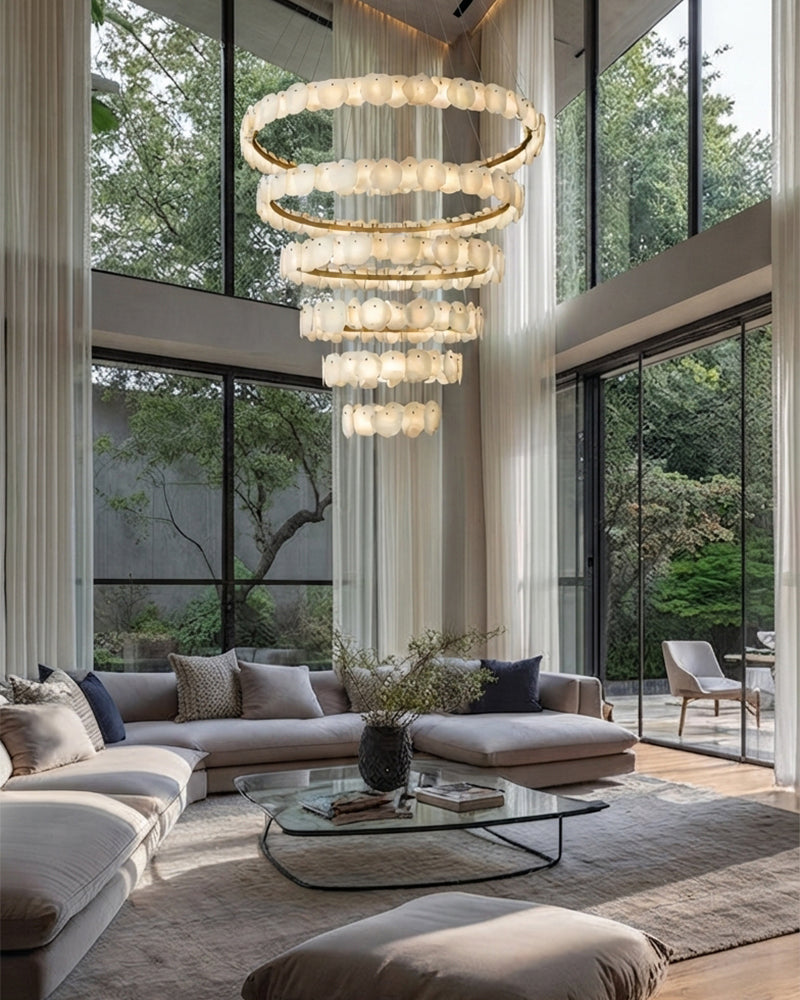
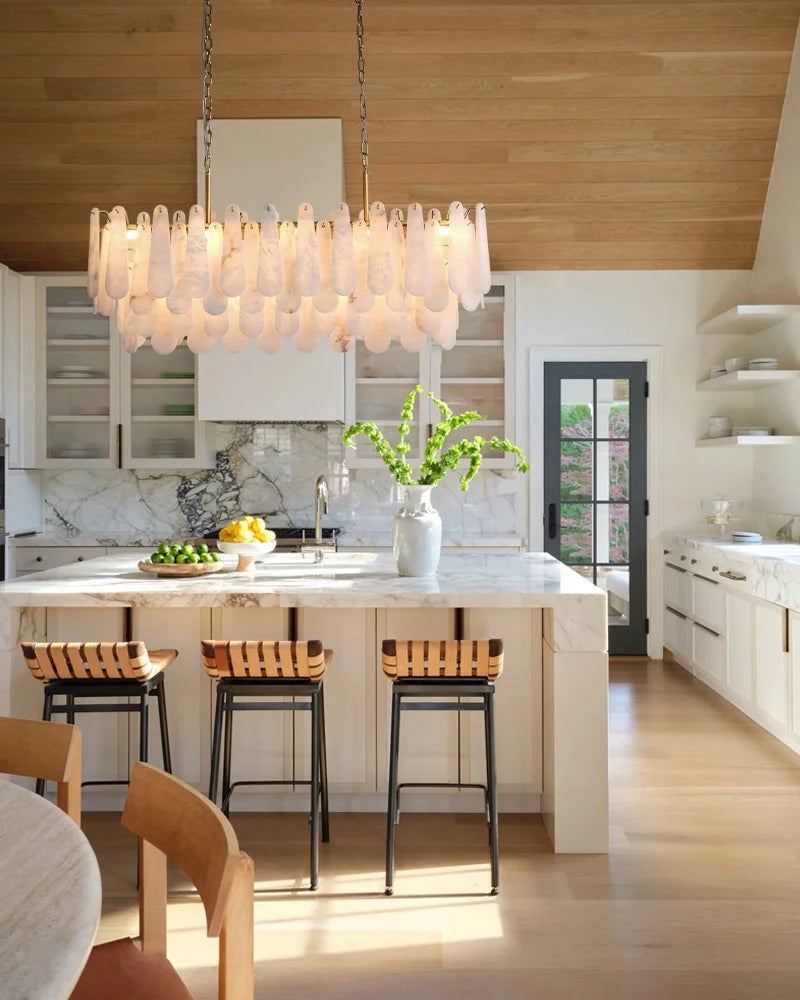
Alabaster is a soft, translucent natural gypsum stone prized for its unique ability to diffuse light through its crystalline structure. When illuminated, the stone's internal veining and density create a soft, warm glow that mimics the appearance of candlelight.
I’m choosing between an alabaster shade and an opal glass shade for a pendant—how will the light diffusion and glare feel different in a dining room?
Alabaster provides a more organic, textured light diffusion that creates a sophisticated, moody atmosphere compared to the uniform, clinical brightness of opal glass. While both reduce glare, alabaster’s natural opacity offers a richer depth that elevates dining room aesthetics.
Can you recommend an alabaster chandelier size and hanging height for a room with a standard ceiling and a round dining table?
For a round table, choose a chandelier diameter roughly half the table's width to maintain visual balance. In a room with standard eight-foot ceilings, hang the fixture approximately 30 to 34 inches above the tabletop to ensure optimal light coverage without obstructing sightlines.
I want an alabaster semi-flush mount with black metal accents—what design details should I look for so it doesn’t feel too heavy or industrial?
Seek fixtures featuring thin, minimalist metal frames or delicate brass-finished hardware to contrast the substantial weight of the stone. Choosing a low-profile design with exposed stone edges will maintain an airy, elegant aesthetic rather than a heavy industrial look.
How do I tell if an alabaster lamp or sconce is real stone versus resin, and what are the signs in photos and product specs?
Real alabaster exhibits irregular, non-repeating veining patterns and a cool-to-the-touch surface, whereas resin often shows repetitive textures or perfectly uniform translucency. Check product descriptions for terms like 'genuine stone' or 'natural gypsum' and look for high-resolution photos that highlight unique, organic mineral inclusions.
I’m ready to buy an alabaster pendant, but I’m unsure which bulb type and color temperature will make the stone look warm without turning yellow—what should I pick?
Use a high-CRI LED bulb with a color temperature between 2700K and 3000K to enhance the stone's natural warmth without introducing artificial yellow hues. A high Color Rendering Index ensures the alabaster's true mineral tones are accurately represented.
My alabaster shade arrived with natural veining and slight color variation—how do I know what’s normal versus a defect worth returning?
Natural veining, mineral deposits, and subtle color shifts are inherent characteristics of genuine alabaster and are considered marks of quality rather than defects. A return is only warranted if you find structural cracks, deep chips, or significant surface pitting that compromises the stone's integrity.
What’s the safest way to clean an alabaster light fixture without damaging the stone or leaving dark spots?
Dust the fixture regularly with a soft, dry microfiber cloth to prevent debris buildup. If deep cleaning is necessary, use a slightly damp cloth with distilled water, ensuring you immediately dry the stone thoroughly to prevent moisture absorption.
I have an older vintage-style alabaster lamp and the shade feels loose—what parts usually need tightening or replacing, and how do I measure them?
Loose shades are typically caused by worn-out fitter screws or a degraded washer at the socket base. Measure the diameter of the shade's opening and the existing fitter hardware to ensure any replacement parts or mounting rings provide a secure, snug fit.
I’m replacing a single ceiling light with a heavier alabaster fixture—what should I check about the junction box and mounting bracket before ordering?
Verify that your existing junction box is rated for the specific weight of your alabaster fixture, as natural stone is significantly heavier than glass or metal. If the fixture exceeds 50 pounds, you must ensure the box is supported by a heavy-duty mounting bracket or a fan-rated box.
Reach out anytime at support@lightsstory.com
Become a LightsStory member to enjoy 5% off all orders, earn points and rewards for you and to share with friends at https://lightsstory.com/pages/lightsstory-loyalty-membership

Leave a comment
This site is protected by hCaptcha and the hCaptcha Privacy Policy and Terms of Service apply.