



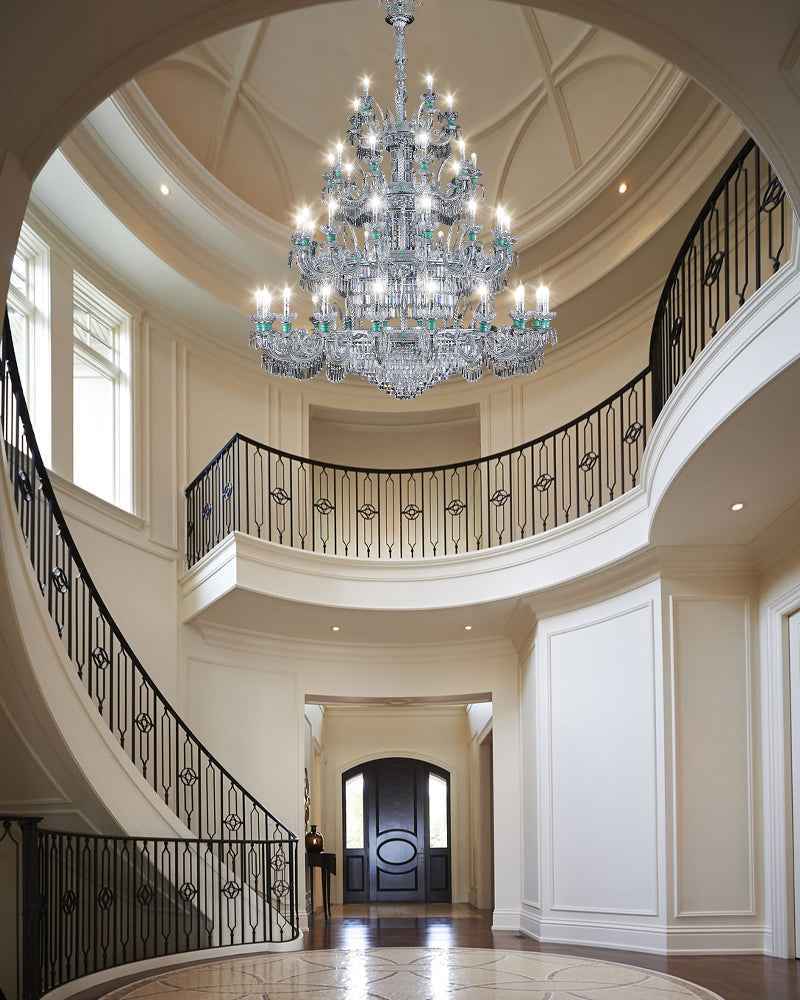



There is a specific moment in the life of every luxury interior when the centerpiece of the room—the grand chandelier—ceased to be a source of ethereal light and becomes, instead, a testament to the passage of time. Dust, the silent adversary of brilliance, settles upon the prisms. Cooking oils, atmospheric humidity, and the microscopic debris of daily life form a hazy film over the crystal. The result is a tragedy of physics: the light no longer refracts; it merely diffuses. The rainbows vanish. The sparkle dulls.
At LightsStory, we understand that a chandelier is not merely a fixture; it is the jewelry of the home. It is a statement of intent, a focal point of architectural beauty, and an investment in atmosphere. To own such a piece is to accept the responsibility of its curation. The question, then, is not simply how to clean it, but what creates the ultimate restoration of brilliance? What is the best chandelier cleaner on the market, and how does one distinguish between a common household solvent and a formula worthy of fine crystal?
In this comprehensive guide, we will traverse the chemistry of clean, the methodology of the "white glove" standard, and ultimately reveal the best solutions to restore your luminary to its original, gallery-quality glory.
The Physics of Refraction: Why Cleaning Matters
To understand why the choice of cleaner is paramount, one must first appreciate the engineering of a crystal chandelier. Whether your piece is composed of heritage Swarovski crystals, hand-cut Bohemian glass, or Murano artistry, the principle remains the same: light enters the prism, bends, and exits, separating into its spectral components. This is the "fire" of the diamond, the dance of color that captivates the eye.
When a film of dust or grease coats the surface, the refractive index changes. Light is blocked or scattered before it can perform its prismatic dance. A standard glass cleaner often leaves a residue—streaks of surfactants that, while invisible on a window, act as opaque barriers on a faceted crystal. Therefore, the "best" cleaner is defined by what it doesn't leave behind.
The Criteria for Excellence: What Makes a Cleaner "The Best"?
Before we name names, we must establish the criteria for a luxury-grade cleaning solution. At LightsStory, our standards are exacting. A product must meet the following four pillars of performance to be considered for your home:
- Ammonia-Free Formulation: Ammonia is the enemy of metal finishes. While it cleans glass effectively, it can tarnish the delicate gold, brass, or silver plating that holds your chandelier together. The best cleaner protects the frame while purifying the crystal.
- Sheeting Action: For those utilizing the "drip-dry" method, the fluid must reduce surface tension immediately, allowing the liquid to sheet off the crystal, carrying dirt with it, without forming droplets that dry into spots.
- Rapid Evaporation: The solution must contain a precise balance of alcohol or volatile agents that ensure rapid drying. Prolonged moisture can seep into electrical sockets or rust the pinning wires.
- Residue-Free Finish: Upon drying, there must be zero film. The crystal should be clinically clean to allow for maximum light transmission.
The Verdict: The Top Contenders for Crystal Care
While the market is flooded with generic cleaners, the luxury sector relies on a few proven formulations. Here is the LightsStory curation of the best chandelier cleaners available today.
1. The Industry Standard: Sparkle Plenty Chandelier Cleaner
For decades, Sparkle Plenty has held the crown in high-end lighting showrooms. It is often the default recommendation for a reason. Designed specifically for the "spray and drip" method, it is engineered to dissolve dust and grime on contact. Its chemical composition is aggressive against dirt but gentle on fixtures. It requires no hand-rubbing, which is a significant advantage for intricate fixtures with thousands of small octagons. It dries without spotting, provided the application is heavy enough to induce the necessary "sheeting" action.
2. The Professional’s Choice: Hagerty Crystal Clean
Hagerty is a brand synonymous with silver and jewelry care, and their approach to chandeliers is equally refined. Their formula is slightly more viscous, allowing it to cling momentarily to the grime before dripping away. It is exceptional for dining room chandeliers that may have accumulated a microscopic layer of airborne grease from food service. It leaves a finish that many lighting designers describe as "crisp."
3. The Purist’s Concoction: The DIY Isopropyl Blend
For the ultra-luxury homeowner who distrusts commercial chemicals, the absolute best cleaner is often one made fresh in the kitchen, provided the ingredients are pharmaceutical grade. The recipe is simple yet unforgiving:
- One part Isopropyl Alcohol (99% purity)
- Three parts Distilled Water (Never tap water, which contains minerals that leave spots)
- A drop of professional wetting agent (like a rinse aid)
This mixture mimics the properties of the highest-end commercial cleaners but guarantees a lack of preservatives or dyes. It is the choice for antique restoration where ingredient control is critical.
The Methodology: Deployment of the Cleaning Agent
Identifying the bottle is only half the battle. The application is where the magic—or the disaster—happens. We have reached the critical juncture of the process. This is the Shop Now
LightsStory is a premium online lighting store specializing in modern chandeliers, pendant lights, and high-end residential lighting.
Its collection covers chandeliers, ceiling lights, wall sconces, and table lamps, made to order using materials such as Murano glass and alabaster.
Exclusively serving the US and Canada, LightsStory delivers custom, design-driven lighting for contemporary homes and interior projects.
where precision meets chemistry. How you apply the cleaner dictates the longevity of the shine.
Method A: The Drip-Dry Technique (Touchless)
This is the most popular method for complex, modern chandeliers or heavy Empire-style fixtures where unhooking crystals is impossible.
- Preparation: Turn off the fixture and tape the switch. Place a drop cloth and a layer of towels directly under the fixture to catch the run-off. Cover the light bulbs with sandwich bags or remove them entirely to prevent liquid from entering the sockets.
- The Saturating Spray: Using your chosen cleaner (Sparkle Plenty or similar), spray the crystal liberally. You are not misting; you are drenching. The fluid acts as a vehicle, picking up the dust and flowing off the bottom of the prism.
- The Wait: Allow the fixture to drip for at least 45 minutes.
- The Polish (Optional): Once dry, a quick touch-up with a microfiber glove on the bottom-most prisms (where droplets collect) ensures perfection.
Method B: The White Glove Technique (Hand Polishing)
For the true connoisseur, and for fixtures with large, flat crystal surfaces (such as rock crystal or large teardrops), the spray method is insufficient. Hand polishing is the only path to perfection.
- The Setup: Wear white cotton gloves. Skin oils are the enemy.
- The Application: Spray the cleaner onto a microfiber cloth, never directly onto the fixture. This protects the electrical components.
- The Wipe: Gently massage each crystal. This mechanical action removes stubborn grime that a spray might miss.
- The Buff: Use a second, dry cloth to buff the crystal to a high shine immediately.
Safety and Preservation: Protecting the Heirloom
A luxury blog would be remiss if it did not address the risks involved. Using the wrong cleaner or technique can degrade the lacquer on brass arms, causing them to tarnish or turn black over time. Always test your cleaner on a discrete part of the metal frame before dousing the entire fixture.
Furthermore, never rotate the chandelier by the body to reach the other side. This can unscrew the fixture from the ceiling box or twist the internal wiring, causing a short circuit. Always move your ladder around the fixture. It is a dance of patience, not convenience.
The Role of Frequency in Luxury Maintenance
How often should one deploy the best chandelier cleaner? In a grand foyer, an annual deep clean is usually sufficient. In a kitchen or dining area, where oils and steam are present, a bi-annual schedule is recommended. However, a light dusting with a feather duster or an electrostatic wand should be performed monthly. This prevents the dust from bonding with humidity, extending the time between deep chemical cleans.
What to Avoid: The "Natural" Myths
In the age of eco-conscious living, many blogs suggest cleaning chandeliers with vinegar or lemon juice. At LightsStory, we advise against this vehemently for high-end fixtures. Acidic substances like vinegar can etch delicate metal plating. If the acid seeps into the pinning (the small wires connecting the crystals), it can weaken the metal, leading to structural failure and falling crystals. Furthermore, vinegar leaves a smell that lingers, unbefitting a luxury environment. Stick to pH-neutral or alcohol-based specialized cleaners.
The LightsStory Philosophy: Light as an Experience
Why do we dedicate 2,000 words to cleaning fluid? Because light is the medium through which we experience our lives. A dim, dusty room feels stagnant and old. A room illuminated by a sparkling, prismatic chandelier feels energetic, expansive, and alive. The crystal chandelier is a manipulator of mood. It takes a single, harsh bulb and transforms it into a thousand soft, glittering stars.
When you select the best chandelier cleaner, you are not just buying a solvent. You are buying the restoration of that mood. You are purchasing the "wow" factor that guests feel when they walk through your doors. You are respecting the artisan who cut the glass and the designer who envisioned the form.
Advanced Tips for Specific Crystal Types
Swarovski Spectra vs. Strass
Swarovski elements come in various grades. Strass, the highest quality, contains lead oxide (over 30%) to maximize refraction. It also has a specialized coating to repel dust. When cleaning Strass, avoid aggressive scrubbing which can damage this microscopic coating. The drip-dry method with a high-quality, alcohol-based cleaner is preferred here to minimize physical contact.
Rock Crystal
Rock crystal is natural quartz, mined from the earth rather than manufactured. It often has natural inclusions and fissures. Do not use the drip method on rock crystal, as fluid can seep into natural fissures and cause discoloration over time. Always hand-polish rock crystal with a barely-damp cloth.
Murano Glass
Venetian glass is often colored and hand-blown. It is less dense than lead crystal but more artistic. Be wary of thermal shock. Ensure your cleaning fluid is room temperature, and the bulbs have been off for at least an hour. Cold spray on hot glass can cause immediate cracking.
The Final Polish
Maintaining a luxury home is an endless cycle of curation and care. The chandelier, hanging high above the fray, often escapes notice until it is too late—until the sparkle is gone. By incorporating the right products and techniques into your home maintenance repertoire, you ensure that your lighting remains as breathtaking as the day it was installed.
Whether you choose the convenience of Sparkle Plenty, the precision of Hagerty, or the purity of a custom distilled blend, the secret lies in the commitment to the process. Treat your light with reverence. Climb the ladder (safely). Wear the white gloves. And let there be light—brilliant, refracted, and unapologetically beautiful.
At LightsStory, we believe that every fixture tells a story. Ensure yours isn't obscured by the dust of yesterday. Choose the best cleaner, and let your story shine.



Leave a comment
This site is protected by hCaptcha and the hCaptcha Privacy Policy and Terms of Service apply.