

chandeliers for kitchen islands
The integration of suspension lighting within the culinary workspace represents a critical intersection of architectural form and photometric function. When selecting the appropriate fixture for a central island, one must navigate complex variables ranging from spatial ergonomics and ceiling topography to the specific lumen output required for precision tasks. The ideal installation does not merely illuminate a surface; it defines the volumetric hierarchy of the room, anchoring the visual weight of the kitchen while providing high-fidelity illumination essential for food preparation and social interaction.
How We Selected the Best chandeliers for kitchen islands
Our methodology for evaluating lighting fixtures is rooted in a rigorous technical analysis of material composition, engineering tolerances, and luminous performance. We prioritize fixtures that demonstrate superior thermal management for LED longevity, robust suspension systems capable of maintaining structural equilibrium, and finishes engineered to withstand the unique environmental stressors of a kitchen environment, such as aerosolized oils and fluctuating humidity. Furthermore, our selection criteria demand a high Color Rendering Index (CRI) of 90 or above, ensuring that the visual spectrum is accurately represented—a non-negotiable requirement for any workspace dedicated to the culinary arts.
Architectural Scale and Spatial Calibration
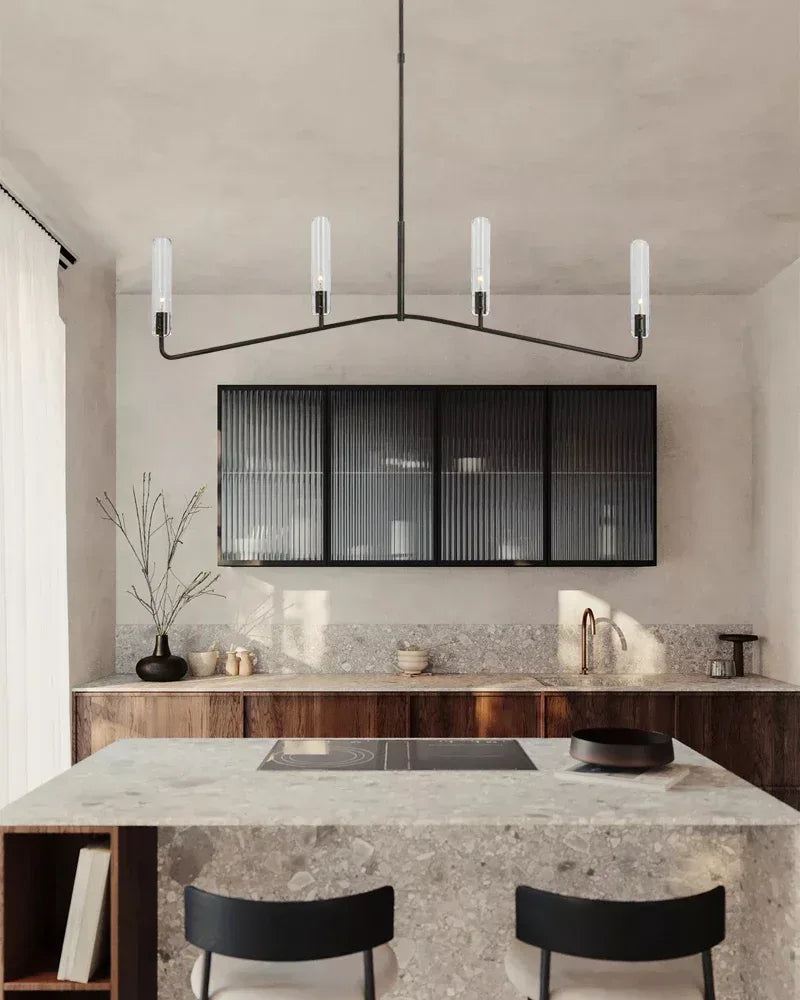
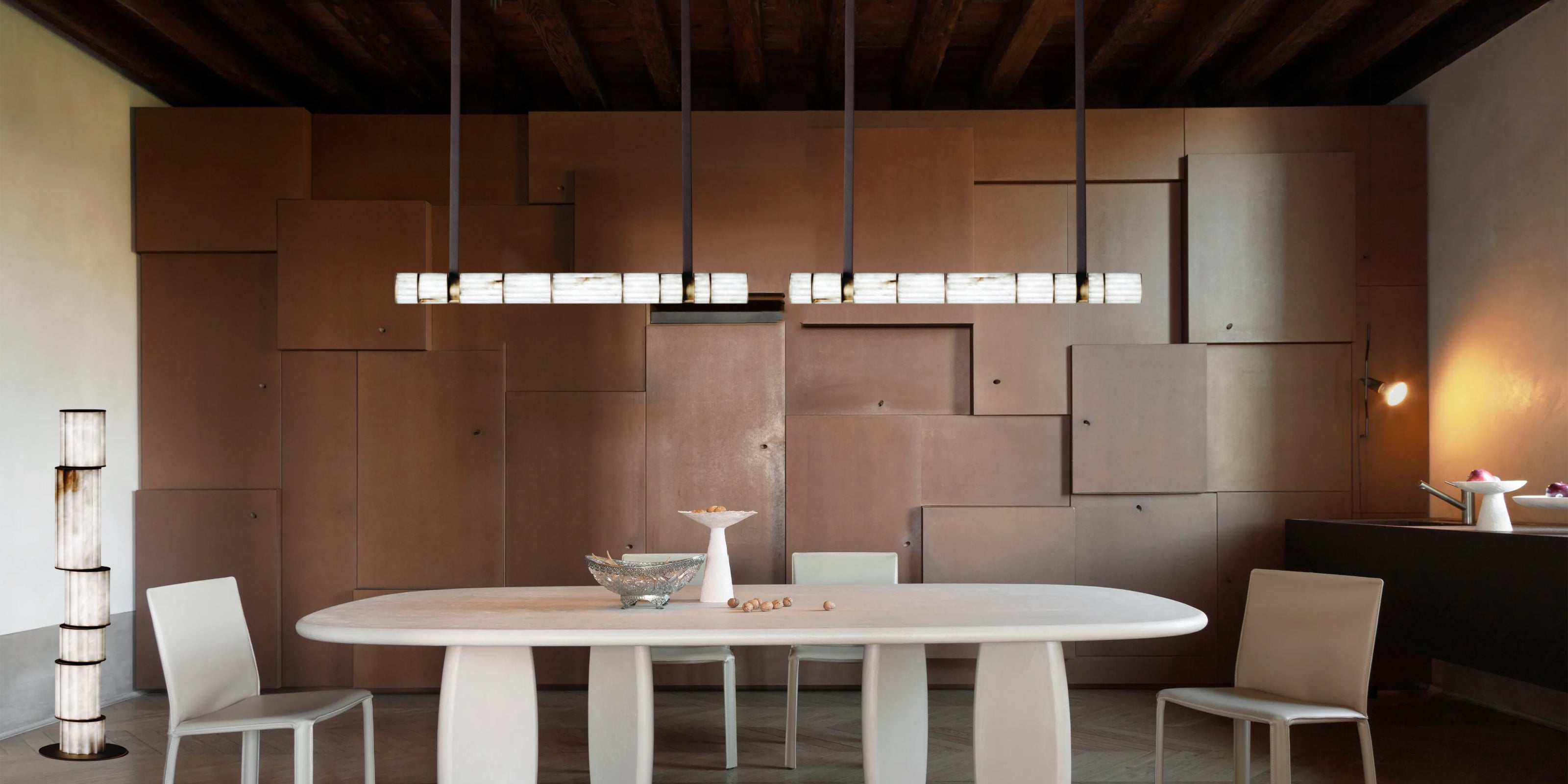
The most frequent failure mode in kitchen lighting design is a misalignment of scale. The geometric relationship between the chandelier and the island requires precise mathematical calibration to ensure visual harmony and functional coverage. A linear suspension fixture, often the preferred choice for rectangular islands, should generally span approximately two-thirds to three-quarters of the island's total length. This ratio prevents the fixture from overwhelming the spatial volume while ensuring that light is distributed evenly across the lateral plane of the work surface.
For islands that utilize a cluster of pendants or a singular, multi-arm chandelier, the concept of "negative space" becomes paramount. There must be sufficient clearance—typically 6 to 12 inches—between the edge of the fixture and the edge of the countertop. This buffer zone eliminates the risk of head collisions during use and creates a visual border that frames the illumination source. When dealing with higher ceilings, the vertical mass of the chandelier must increase proportionally; a fixture that lacks vertical density will appear visually anemic against a vaulted or cathedral ceiling backdrop.
Photometric Performance and Layered Illumination
While aesthetic form is subjective, the physics of light is absolute. Kitchen islands serve a dual purpose: they are high-intensity task stations for chopping and plating, and they are ambient gathering spots for social engagement. Consequently, the selected chandelier must offer a versatile photometric profile. We analyze the "luminous flux"—the total amount of light emitted—relative to the beam angle. For task lighting, a downward-firing component is essential to deliver high foot-candle readings directly onto the countertop without casting shadows from the user’s silhouette.
However, a fixture that only projects light downward creates a "cave effect," leaving the ceiling in darkness. The superior technical choice is a fixture that offers both direct downlighting and a component of ambient or uplighting. This layered approach softens the contrast ratios in the room, reducing eye strain. Furthermore, the color temperature (measured in Kelvin) is critical. A range of 2700K to 3000K is the industry standard for residential kitchens, providing a warm yet clean light that complements food presentation. Anything above 4000K risks introducing a sterile, clinical atmosphere incompatible with residential warmth.
Materiality and Environmental Resilience
The kitchen environment is chemically aggressive. Fixtures are subjected to heat, steam, and airborne grease particles that can degrade inferior finishes over time. When evaluating chandeliers for kitchen islands, the metallurgy and surface treatment are indicators of long-term viability. Electroplated finishes, such as polished nickel or satin brass, offer a molecular bond that resists peeling and tarnishing better than standard lacquers. PVD (Physical Vapor Deposition) coatings represent the gold standard for durability, providing a surface hardness that is highly resistant to abrasion and corrosion.
Glass components also require scrutiny. While clear glass offers maximum light transmissivity, it offers zero glare control. In a kitchen where reflective surfaces like polished stone or stainless steel are prevalent, clear glass can result in uncomfortable specular highlights. Frosted, seeded, or prismatic glass acts as a diffuser, scattering the photons to create a softer, more uniform glow. This diffusion is particularly important for LED sources, which can be intensely bright and point-source specific. The maintenance protocol must also be considered; complex crystal assemblies or open-bowl fixtures that catch dust and grease will require frequent, labor-intensive cleaning to maintain their refractive qualities.
Structural Integration and Installation Protocols
The installation of a substantial chandelier over an island is a structural undertaking that often exceeds the capacity of a standard junction box. Many high-end fixtures, particularly those utilizing solid brass components or thick cast glass, possess a significant static load. It is imperative to verify that the ceiling junction box is braced directly to the structural joists or blocked with additional lumber to support the weight. Failure to reinforce the mounting point can lead to ceiling drywall failure or fixture misalignment.
Furthermore, the suspension mechanism—whether chain, aircraft cable, or rigid stem—dictates the flexibility of the installation. Rigid stems offer a clean, architectural look but require precise measurement and often the use of swivel canopies to accommodate sloped ceilings. Aircraft cables offer micro-adjustability, allowing for perfect leveling even if the ceiling plane is slightly uneven. The electrical driver, particularly for integrated LED fixtures, must be compatible with the home’s dimming system. We recommend verifying compatibility between the fixture’s driver (TRIAC, ELV, or 0-10V) and the wall switch to prevent stroboscopic flickering or audible buzzing at low light levels.
Thermal Management in Solid State Lighting
As the industry transitions almost exclusively to solid-state LED lighting, thermal management has become a defining characteristic of fixture quality. Unlike incandescent bulbs which radiate heat as infrared energy, LEDs conduct heat backwards into the circuit board. If this heat is not efficiently dissipated, the LED junction temperature rises, leading to premature failure and color shift (where the light turns pink or green over time). High-quality chandeliers for kitchen islands incorporate engineered heat sinks—often integrated into the metal body of the fixture itself—to passively cool the diodes.
When selecting a fixture with integrated LEDs (where the bulb is not replaceable), one must look for manufacturer specifications regarding "L70" lifespan, which indicates the number of hours before the light output diminishes to 70% of its original brightness. A premium fixture will offer an L70 rating of 50,000 hours or more. For fixtures utilizing replaceable bulbs, the design must allow for sufficient airflow around the bulb socket to prevent heat entrapment, which significantly shortens the life of LED retrofit lamps.
What to Look for When Buying
- Lumen Output and Dimmability: Ensure the fixture provides at least 2,000 to 3,000 total lumens for adequate task lighting, paired with ELV or TRIAC dimming capabilities for ambient control.
- High CRI Rating: Prioritize fixtures with a Color Rendering Index (CRI) of 90+ to ensure food ingredients and finishes appear vibrant and accurate.
- Adjustable Suspension Systems: Verify that the fixture includes multiple stem lengths or adjustable cables to achieve the optimal hang height (typically 30-36 inches above the counter).
- Damp Location Rating: While not strictly mandatory for dry islands, a damp-rated fixture offers superior resistance to steam and humidity common in heavy-use kitchens.
- Glare Mitigation: specific optical engineering, such as diffusers, lenses, or recessed light sources, to prevent direct eye contact with the bare bulb or diode.
Frequently Asked Questions
What is the optimal height for hanging a chandelier above a kitchen island?
The industry standard for suspension height is between 30 and 36 inches from the surface of the countertop to the lowest point of the fixture. However, this metric is subject to user ergonomics and ceiling height. For taller households, raising the fixture to 36-40 inches ensures unobstructed sightlines across the island. Conversely, in rooms with ceilings higher than 9 feet, the fixture can be hung slightly higher to maintain proportion with the overall vertical volume of the space.
Can I install a chandelier on a sloped kitchen ceiling?
Yes, but it requires specific hardware. Fixtures suspended by chains or flexible aircraft cables naturally hang plumb due to gravity and are inherently compatible with sloped ceilings. For fixtures utilizing rigid stems, you must ensure the canopy (the part attaching to the ceiling) includes a "hang-straight" swivel or ball-joint mechanism. This allows the stem to hang vertically regardless of the ceiling pitch. Always verify the maximum slope angle the canopy can accommodate before purchase.
How do I determine the correct width for a linear island chandelier?
To maintain visual balance, the linear fixture should not extend to the edges of the island. A general technical rule is to subtract 12 to 24 inches from the total length of the island to determine the maximum fixture length. This leaves a buffer of 6 to 12 inches on either side. For example, on an 8-foot (96-inch) island, a linear chandelier between 72 and 84 inches provides substantial coverage without creating a sense of overcrowding or collision risk.
Conclusion
Selecting the appropriate chandeliers for kitchen islands is a discipline that merges aesthetic intent with engineering precision. It requires a holistic view of the kitchen as a workspace, considering the interplay of lumen output, color rendering, and structural integration. By prioritizing high-grade materials, proper thermal engineering, and correct spatial scaling, one ensures that the lighting installation serves as a durable, high-performance asset that elevates both the utility and the architectural distinction of the home.


发表评论
此站点受 hCaptcha 保护,并且 hCaptcha 隐私政策和服务条款适用。